What Are the Key Differences Between Standard and Ultra-Precision Collets?
- nazmakhatoon1057
- Mar 28
- 3 min read
In machining, even the smallest details can make a huge difference. Collets, though small, are one of the most critical components in ensuring precision and consistency.
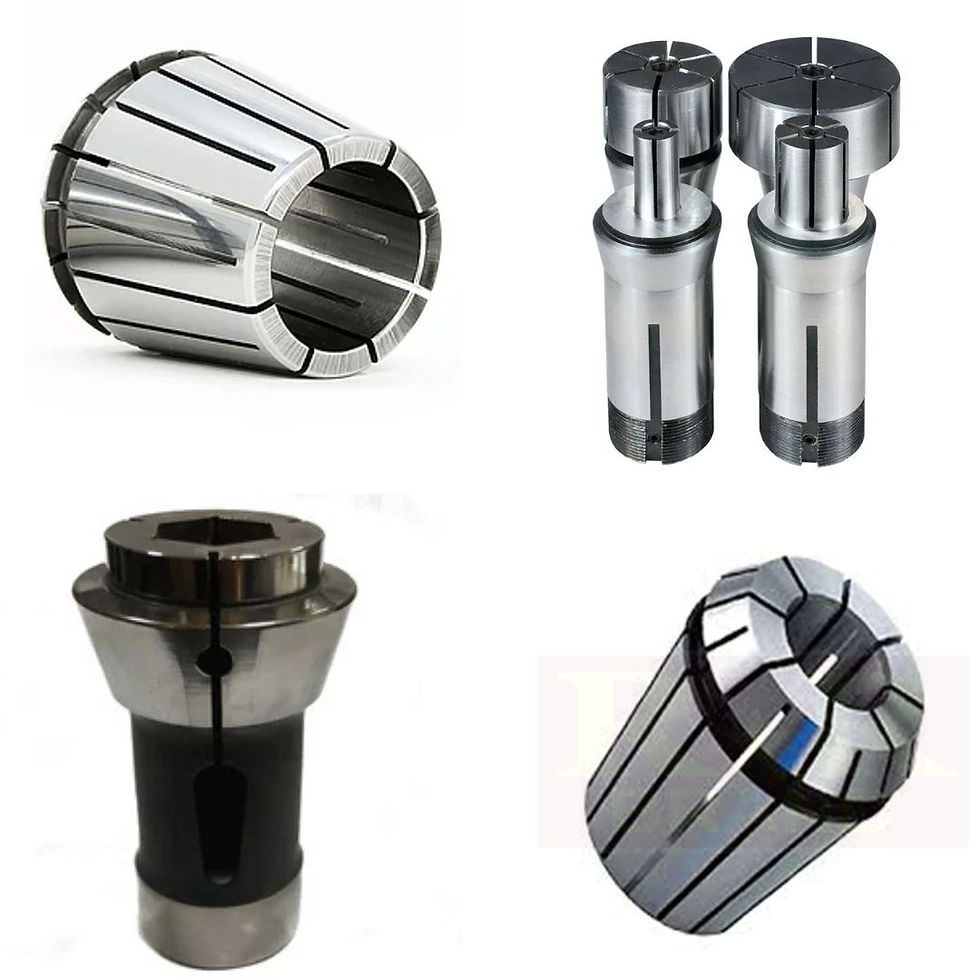
They hold your tools and workpieces firmly, directly impacting accuracy, surface finish, and overall productivity. As machining requirements become more advanced, understanding the difference between standard and ultra-precision collets is essential.
For businesses working with trusted Collet manufacturers, knowing these differences can help in choosing the right collet for the right application.
Understanding Standard Collets
Standard collets are the workhorses of the workshop. They are widely used in everyday machining tasks like milling, turning, and drilling. They provide a reliable grip, are easy to use, and cost-effective, making them ideal for operations where ultra-tight tolerances are not critical.
Popular Collets such as Er collets are part of this category. They offer flexibility and a decent clamping range, making them a dependable choice for most routine machining jobs.
While standard collets perform well in general applications, they are not designed to achieve micron-level precision. That’s where ultra-precision collets come into play.
What Are Ultra-Precision Collets?
Ultra-precision collets are engineered for high-performance machining environments where even the slightest misalignment can affect the outcome. These collets are manufactured to extremely tight tolerances and polished surfaces, ensuring minimal runout and maximum concentricity.
Products like DIN 6343 Collets are often used in scenarios that demand the highest accuracy. They maintain a consistent clamping force and alignment, even at high speeds, making them essential in industries like aerospace, medical devices, and high-speed CNC machining.
For companies working with a specialized collet manufacturer in india, ultra-precision collets provide the reliability and consistency needed for critical applications.
Key Differences Between Standard and Ultra-Precision Collets
1. Accuracy and RunoutAccuracy is the biggest difference. Standard collets may have higher runout, which is acceptable for general machining. Ultra-precision collets are designed for near-zero runout, ensuring the highest level of accuracy.
2. Manufacturing QualityUltra-precision collets undergo advanced grinding and finishing processes to meet tight tolerances. Standard collets, while dependable, do not go through this same level of refinement.
3. ApplicationsStandard collets are ideal for everyday machining tasks. Ultra-precision collets are required for operations where precision is non-negotiable. For example, Traub collets are widely used in automatic lathes for consistent, repeatable performance.
4. Cost ConsiderationStandard collets are more budget-friendly, while ultra-precision collets come at a higher price due to their advanced manufacturing and superior accuracy. The investment, however, pays off in reduced errors and better results.
5. Tool Life and StabilityUltra-precision collets reduce vibration and improve tool stability, which can significantly extend tool life. Standard collets, while effective for many tasks, may lead to more wear in high-speed or precision-critical operations.
Choosing the Right Collet
The choice between standard and ultra-precision collets depends on the task at hand. For everyday machining, standard collets are sufficient. For high-speed, high-precision work, ultra-precision collets are essential.
Advanced setups like CNC collet chucks can further enhance the performance of both types, ensuring stability and consistent clamping force.
The Importance of Collet Range
Having the right collet for your tool and application is just as important as precision. Trusted Collet manufacturers like Sikka Collets & Accessories offer a wide range of options, including A-25 Collets, A-42 Collets, and 161E Collets, each designed for specific requirements.
For example:
A-25 Collets work well for smaller components
A-42 Collets provide stronger grip for larger parts
161E Collets are ideal for high-precision setups
Din collets are also popular for their standardized design and consistent performance across various industrial applications.
Why Choosing the Right Collet Matters
Using the wrong type of collet can result in poor surface finish, increased vibration, tool wear, and even workpiece damage. Ultra-precision collets minimize these risks, while standard collets are dependable for less demanding tasks.
Partnering with an experienced collet manufacturer in india ensures access to high-quality products suited for different machining needs.
Final Thoughts
The difference between standard and ultra-precision collets boils down to accuracy, performance, and application requirements. Standard collets are great for routine work, while ultra-precision collets are a must for high-speed, high-accuracy machining.
By choosing the right Collets, including Er collets, Traub collets, and DIN 6343 Collets, manufacturers can improve machining outcomes, reduce errors, and increase efficiency. Working with trusted Collet manufacturers like Sikka Collets & Accessories ensures that your shop has the right tools for the job, every time.
Comments