Measuring Tool Holder Concentricity: Best Practices
- nazmakhatoon1057
- 5 days ago
- 5 min read
Even the most advanced CNC machine and premium cutting tool can struggle to deliver accurate results if the tool holder isn't running true. One of the most overlooked yet important aspects of machining accuracy is tool holder concentricity.
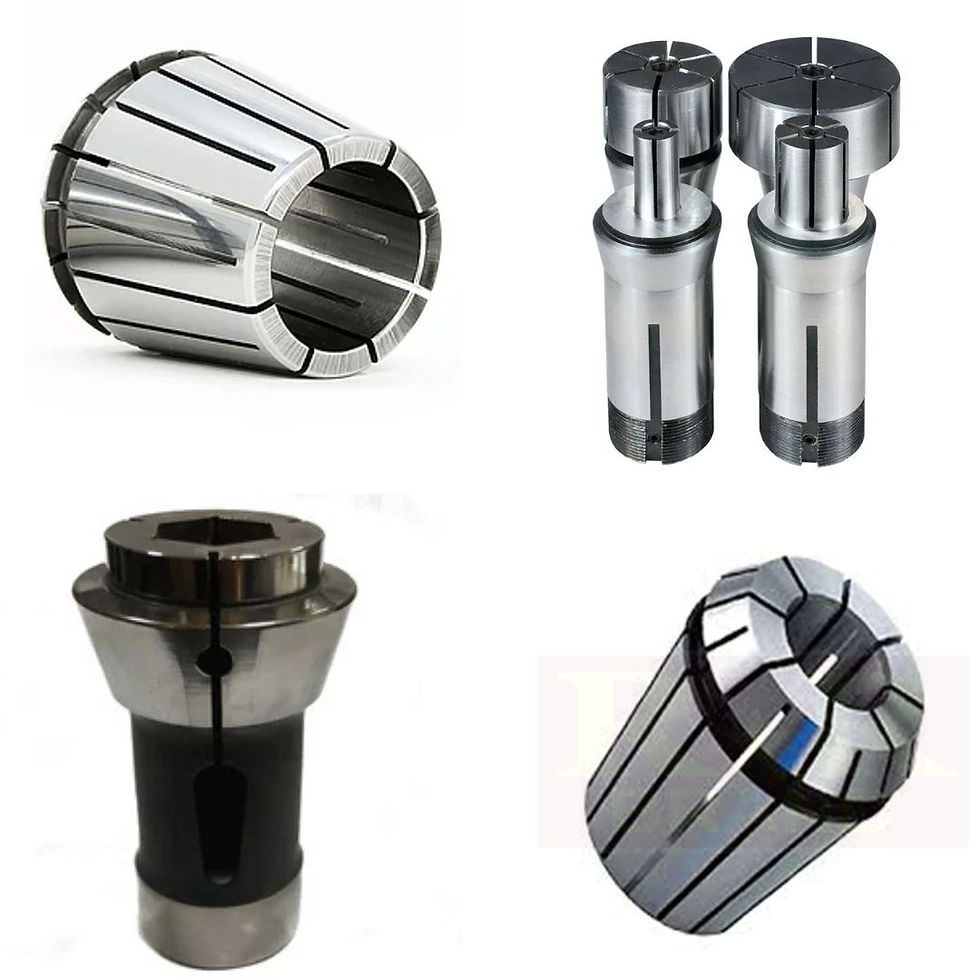
When tool holders maintain proper concentricity, cutting tools rotate smoothly around their centerline, resulting in better surface finishes, longer tool life, and improved dimensional accuracy. On the other hand, poor concentricity can lead to excessive runout, vibration, uneven tool wear, and costly production issues.
Whether you're using ER Collets, Traub Collets, or other precision workholding systems, understanding how to measure and maintain concentricity can make a significant difference in your machining performance.
What Is Tool Holder Concentricity?
Simply put, tool holder concentricity refers to how accurately a cutting tool aligns with the spindle's center axis during rotation.
Imagine spinning a perfectly balanced wheel. It rotates smoothly without wobbling. Now imagine a wheel that is slightly off-center—it vibrates and creates instability. The same principle applies to cutting tools.
If a tool is not perfectly centered, one side of the cutting edge does more work than the other. Over time, this can affect the quality of machined parts and increase wear on both the tool and machine.
That's why experienced machinists and leading Collet manufacturers place so much importance on maintaining proper concentricity.
Why Concentricity Matters in Machining
At first glance, a small amount of runout may not seem like a major issue. However, even tiny deviations can have a noticeable impact on machining performance.
Better Surface Finish
A properly centered cutting tool produces smoother and more consistent finishes. This is especially important when machining precision components where appearance and accuracy matter.
Longer Tool Life
When cutting forces are distributed evenly across the tool, wear occurs more uniformly. This helps extend tool life and reduce replacement costs.
Improved Accuracy
Maintaining good concentricity allows machinists to achieve tighter tolerances and more consistent dimensions.
Reduced Vibration and Chatter
Excessive runout often causes vibration and chatter. Proper concentricity helps create a more stable cutting environment.
Increased Productivity
When tools perform efficiently and wear evenly, machining operations become more reliable and productive.
Common Causes of Poor Concentricity
Understanding what causes concentricity issues is the first step toward preventing them.
Dirt and Contamination
One of the most common problems is contamination between contact surfaces. Small chips, dust, oil residue, or debris can prevent proper seating of the tool holder and collet.
Worn Collets
Like any precision component, Collets wear over time. Continuous clamping and unclamping can gradually reduce their ability to hold tools accurately.
Damaged Tool Holders
Nicks, dents, scratches, or taper damage can affect alignment and introduce unwanted runout.
Improper Assembly
Even high-quality tooling can perform poorly if installed incorrectly. Incorrect collet assembly or uneven tightening can create concentricity issues.
Low-Quality Tooling Components
Precision machining demands precision components. This is why many manufacturers prefer sourcing products from a trusted collet manufacturer in India known for strict quality standards and precision engineering.
Tools Required for Measuring Concentricity
Fortunately, measuring concentricity does not always require expensive equipment. Several commonly used tools can provide highly accurate results.
Dial Test Indicator
This is one of the most widely used tools for checking runout and concentricity.
Precision Test Bar
A calibrated test bar provides a stable reference surface during measurement.
Tool Presetter
Advanced shops often use tool presetters that can measure concentricity quickly and accurately.
Precision Collet System
Using high-quality ER Collets and tool holders is essential for obtaining reliable measurements.
How to Measure Tool Holder Concentricity
Following a proper measurement process helps ensure accurate results.
Clean Everything Thoroughly
Before starting, clean all contact surfaces carefully.
This includes:
Tool holder taper
Collet seat
Collet nut
Test bar
Machine spindle
A tiny chip or particle can affect readings significantly.
Install the Collet Correctly
Make sure the collet is properly seated in the collet nut before inserting the test bar or cutting tool.
This step is particularly important when working with ER Collets, as improper assembly can create false runout readings.
Insert a Precision Test Bar
Use a certified precision test bar that matches the holder's clamping capacity.
Step 4: Position the Dial Indicator
Place the dial indicator against the test bar near the tool holder nose.
Rotate the Spindle Slowly
Rotate the spindle by hand and observe the indicator readings.
The difference between the highest and lowest reading represents the Total Indicated Runout (TIR).
Check Multiple Points
Measure near the holder, at the middle of the test bar, and farther away from the spindle.
This helps identify the source of any misalignment.
What Is Considered Acceptable Runout?
The acceptable level of concentricity depends on the application.
General Machining
A runout of less than 0.01 mm is typically acceptable.
Precision Machining
For high-precision applications, shops often aim for less than 0.005 mm.
High-Speed Machining
Even tighter tolerances may be required to maintain performance and tool life.
This is one reason why premium products from established Collet manufacturers are preferred in demanding machining environments.
Best Practices for Maintaining Tool Holder Concentricity
Maintaining concentricity isn't just about measuring it—it's about preventing problems before they occur.
Inspect Tooling Regularly
Check tool holders and collets for signs of wear, damage, or contamination.
Replace Worn Collets
Old or damaged collets can negatively affect accuracy.
Many machine shops maintain inventory of:
ER Collets
Traub Collets
DIN Collets
DIN 6343 Collets
to ensure consistent performance.
Follow Correct Torque Specifications
Using the correct tightening torque helps achieve consistent clamping force and better tool alignment.
Keep Components Clean
Clean tooling systems before every setup. This simple habit can prevent many accuracy issues.
Store Tool Holders Properly
Proper storage protects holders from accidental damage and helps maintain precision over time.
The Importance of High-Quality Collets
A tool holder is only as good as the collet it uses.
Precision-manufactured Collets offer:
Better gripping force
Improved concentricity
Reduced runout
Longer service life
Greater machining accuracy
Partnering with a reputable collet manufacturer in India ensures access to high-quality collets designed for demanding industrial applications.
Other Collet Systems Used Across Industries
While ER collets are among the most common choices, several specialized collet systems continue to play an important role in manufacturing.
Traub Collets
Traub Collets are widely used in automatic lathes and high-production turning operations where repeatability is essential.
DIN Collets
DIN Collets are manufactured according to recognized standards, ensuring compatibility and consistency across different machine setups.
DIN 6343 Collets
Known for their precision and durability, DIN 6343 Collets are commonly used in turning applications that require reliable workholding performance.
A-25 Collets
A-25 Collets are frequently found in turret lathes and production machining environments.
A-42 Collets
For larger components and heavier applications, A-42 Collets provide enhanced gripping power and stability.
161E Collets
161E Collets are commonly used in Swiss-type machines and precision engineering applications where maintaining tight tolerances is critical.
Choosing the Right Supplier Matters
Achieving consistent concentricity starts with using quality components from trusted suppliers.
When selecting among Collet manufacturers, consider factors such as:
Precision manufacturing capabilities
Product quality
Industry experience
Quality certifications
Technical support
Product range
A reliable collet manufacturer in India can provide a complete portfolio of ER Collets, Traub Collets, DIN Collets, DIN 6343 Collets, A-25 Collets, A-42 Collets, and 161E Collets to support a wide variety of machining operations.
Final Thoughts
Tool holder concentricity may seem like a small detail, but it plays a huge role in machining success. Better concentricity means smoother cutting, improved surface finishes, longer tool life, and greater overall efficiency.
By following proper measurement techniques, maintaining clean tooling systems, and investing in high-quality collets, manufacturers can achieve more reliable and accurate machining results.

Comments