What Happens When Collets Are Over-Tightened?
- nazmakhatoon1057
- 4 days ago
- 5 min read
A properly clamped workpiece or cutting tool helps ensure smooth operations, accurate dimensions, and high-quality finished parts. That's where Collets come in. They are designed to hold tools and workpieces securely while maintaining excellent concentricity and stability during machining.
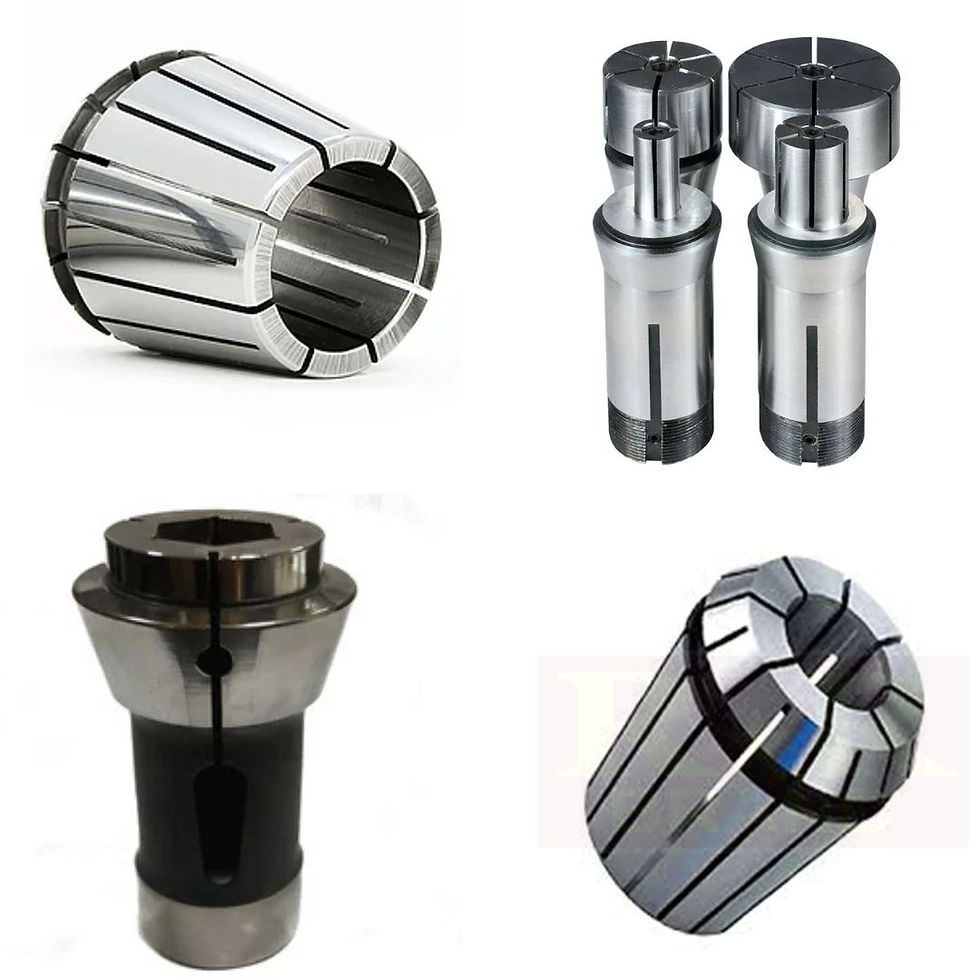
However, there’s a common misconception in many workshops: tighter means better.
In reality, over-tightening a collet can cause more harm than good. While the intention is usually to prevent slippage, excessive clamping force can lead to damaged collets, reduced accuracy, shorter tool life, and even costly machine downtime.
Whether you're using Traub collets, ER collets, DIN 6343 Collets, A-25 Collets, A-42 Collets, or 161E Collets, understanding the effects of over-tightening can help you get the best performance from your machining setup.
Why Proper Collet Tightening Matters
A collet is engineered to apply an even gripping force around a tool or workpiece. When tightened correctly, it provides a secure hold without causing distortion.
The goal isn't to apply maximum force—it's to apply the right amount of force.
Leading Collet manufacturers carefully design their products to operate within specific torque ranges. Going beyond those limits can compromise both the collet and the machining process itself.
Think of it like tightening the lug nuts on a car wheel. Too loose is unsafe, but too tight can damage the components. The same principle applies to collets.
Why Do Operators Over-Tighten Collets?
In many cases, over-tightening happens with good intentions.
An operator may worry about:
Tool slippage during heavy cutting
Workpiece movement
Vibration during machining
Maintaining tighter tolerances
As a result, they apply extra force, assuming it will improve stability. Unfortunately, excessive tightening often creates new problems that affect machining performance.
1. Collet Deformation
One of the first things that happens when a collet is over-tightened is deformation.
Collets are designed to flex slightly during clamping. However, when excessive force is applied repeatedly, the collet can lose its original shape.
Once this happens:
Gripping becomes uneven
Concentricity decreases
Runout increases
Accuracy suffers
Even high-quality Traub collets and DIN 6343 Collets can become distorted if they are consistently tightened beyond recommended specifications.
A deformed collet rarely performs as intended and often needs replacement.
2. Reduced Machining Accuracy
Accuracy is one of the biggest reasons manufacturers invest in premium collets. Unfortunately, over-tightening can have the opposite effect.
When a collet deforms, the workpiece or tool may no longer sit perfectly centered. This small shift can create noticeable dimensional variations during machining.
The result?
Parts falling outside tolerance limits
Inconsistent production quality
Increased rejection rates
Additional inspection and rework
For manufacturers producing precision components, even tiny inaccuracies can become costly over time.
3. Increased Tool Runout
Runout occurs when a cutting tool rotates slightly off-center.
A properly functioning collet minimizes runout and helps maintain smooth cutting performance. But excessive tightening can distort the internal bore of the collet, causing the tool to sit unevenly.
This may lead to:
Poor surface finishes
Uneven cutting
Increased vibration
Reduced machining efficiency
Many shops invest in premium ER collets specifically to reduce runout. Over-tightening can quickly eliminate those advantages.
4. Damage to Cutting Tools
Cutting tools are expensive, and protecting them should be a priority.
When too much force is applied, the tool shank can become damaged. Over time, excessive clamping pressure may leave marks, create deformation, or weaken the tool.
Common consequences include:
Scratched tool shanks
Reduced tool holding performance
Premature tool wear
Shorter tool life
What starts as an attempt to improve grip can end up increasing tooling costs.
5. Shorter Collet Lifespan
Like any precision component, collets have a finite lifespan. However, over-tightening can dramatically shorten it.
Repeated excessive force places stress on the collet's slots and gripping surfaces. Eventually, this can cause:
Fatigue cracks
Loss of elasticity
Reduced gripping power
Premature failure
Replacing collets more often means higher maintenance costs and unnecessary machine downtime.
This is why experienced Collet manufacturers always recommend following specified torque values.
6. Workpiece Distortion
Over-tightening doesn't only affect the collet—it can also affect the workpiece.
This is especially true for thin-walled, lightweight, or delicate components.
Excessive clamping force can:
Distort part geometry
Create out-of-round conditions
Affect concentricity
Lead to dimensional errors
Applications involving A-25 Collets, A-42 Collets, and 161E Collets often require precise clamping control because many parts being machined have tight tolerances.
In such cases, too much force can be just as problematic as too little.
7. Increased Machine Vibration
Many operators are surprised to learn that over-tightening can actually contribute to vibration.
When a tool or workpiece is not perfectly centered due to collet distortion, imbalance occurs during rotation.
This imbalance can cause:
Tool chatter
Rough surface finishes
Faster spindle wear
Reduced machining stability
Over time, excessive vibration may even affect other machine components, leading to additional maintenance requirements.
8. More Difficult Tool Changes
Anyone who has struggled to remove a stuck tool knows how frustrating this can be.
Over-tightened collets often grip tools so aggressively that removal becomes difficult.
This can result in:
Longer setup times
Damaged tool shanks
Operator frustration
Increased wear on holders and collets
Simple maintenance tasks suddenly take longer, reducing overall productivity.
How to Avoid Over-Tightening Collets
The good news is that preventing these issues is relatively simple.
Follow Recommended Torque Values
Every collet system has recommended tightening specifications. Using a torque wrench helps ensure consistent and accurate clamping force.
Inspect Collets Regularly
Look for:
Cracks
Wear marks
Deformation
Surface damage
Replacing worn collets before they fail helps maintain machining accuracy.
Keep Components Clean
Even small chips or debris can affect clamping performance. Clean collets, nuts, and holders regularly to ensure proper seating.
Invest in High-Quality Collets
Choosing products from a trusted collet manufacturer in India can make a significant difference.
Premium Traub collets, ER collets, DIN 6343 Collets, A-25 Collets, A-42 Collets, and 161E Collets are manufactured to tighter tolerances and offer more consistent performance over time.
Train Operators Properly
Sometimes the simplest solution is education. When machine operators understand the effects of over-tightening, they are more likely to follow proper clamping procedures.
The Importance of Choosing Reliable Collet Suppliers
The quality of your collets directly impacts machining performance.
Working with experienced Collet manufacturers ensures you receive products that offer:
Better concentricity
Consistent clamping force
Longer service life
Improved reliability
A reputable collet manufacturer in India can also provide technical guidance to help optimize machine performance and reduce wear-related issues.
Conclusion
Over-tightening a collet may seem like a harmless habit, but it can create a chain reaction of problems throughout the machining process. From collet deformation and increased runout to workpiece distortion and reduced tool life, excessive clamping force often causes more issues than it prevents.
The key is finding the right balance. Proper tightening, regular inspections, and the use of high-quality Collets can help maintain accuracy, improve productivity, and extend equipment life.
Whether you're using Traub collets, ER collets, A-25 Collets, A-42 Collets, 161E Collets, or DIN 6343 Collets, following best practices will help ensure consistent performance and reliable machining results for years to come.

Comments