Hydraulic Chucks vs Collet Chucks: Which Offers Better Accuracy?
- nazmakhatoon1057
- Mar 28
- 3 min read
A small variation in tool holding can affect surface finish, tool life, and even the final quality of the product. That’s why choosing the right tool holding system matters so much.
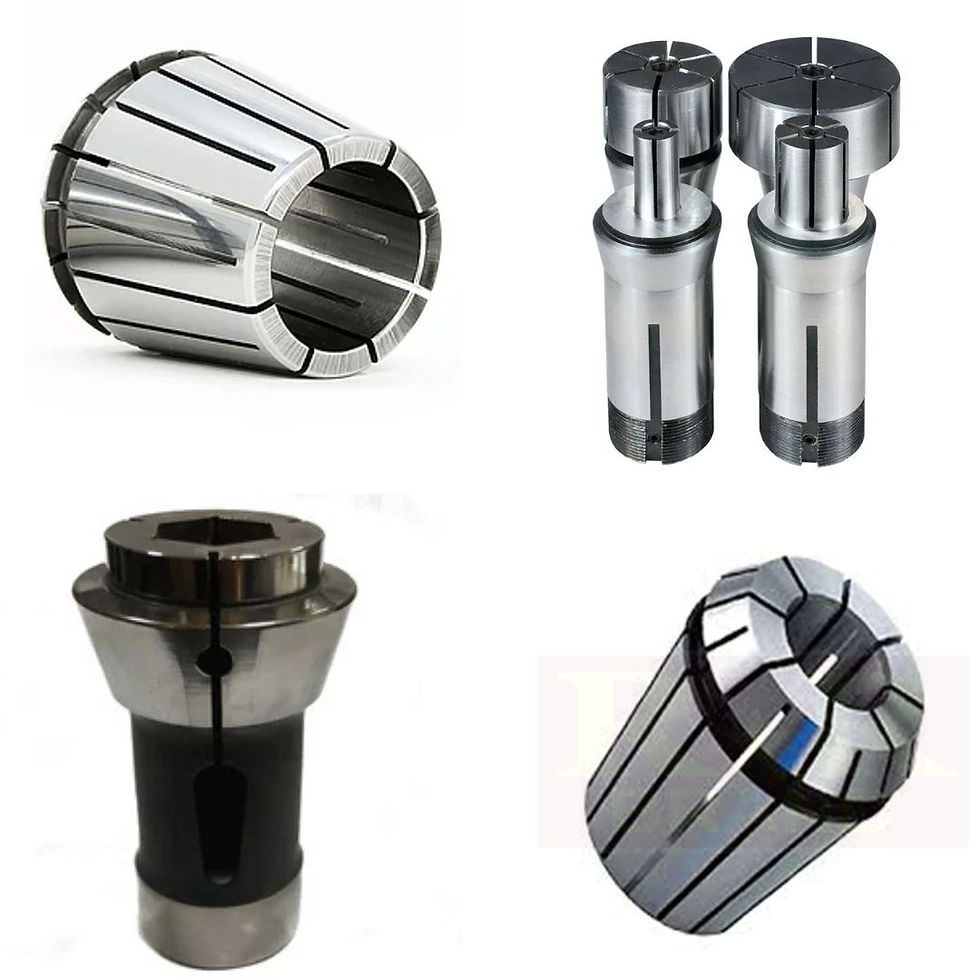
Two popular options in modern machining are hydraulic chucks and collet chucks. Both are reliable, but they perform differently depending on the application.
For professionals working with trusted Collet manufacturers, understanding how these systems compare can make everyday machining more efficient and predictable.
What Makes Hydraulic Chucks Stand Out?
Hydraulic chucks work using internal hydraulic pressure to hold the tool. The pressure is distributed evenly around the tool shank, which creates a very uniform grip.
In practical terms, this means excellent accuracy and minimal runout. Hydraulic chucks are especially useful in finishing operations where even a slight vibration can ruin the surface quality. They also help in reducing chatter, making them a great choice for high-speed applications.
That said, they do come with some limitations. Hydraulic chucks are usually designed for specific tool sizes, so flexibility is limited. This can lead to higher costs since multiple holders may be needed for different tools.
Why Collet Chucks Are So Widely Used
Collet chucks are popular because of their versatility and ease of use. They use interchangeable collets that compress around the tool when tightened, offering a strong and reliable grip.
High-quality Collets, such as Er collets, are designed to deliver consistent accuracy while allowing users to switch between different tool sizes quickly. This flexibility makes them a go-to choice in many workshops.
Systems like CNC collet chucks are widely used because they strike a balance between performance, cost, and convenience.
Comparing Accuracy: Real-World Perspective
When it comes purely to accuracy, hydraulic chucks have a slight edge. Their design ensures extremely low runout and excellent repeatability, especially in finishing operations.
However, modern collet systems have come a long way. Precision-engineered options like DIN 6343 Collets and advanced Din collets can achieve very tight tolerances when used correctly. In many real-world applications, the difference in accuracy is minimal and often depends more on setup and maintenance than the tool holder itself.
For example, Traub collets are known for their reliability in automatic lathes, offering consistent performance even in high-production environments.
Flexibility vs Specialization
This is where the real difference becomes clear.
Hydraulic chucks are more specialized. They are ideal for tasks that demand extremely high precision and smooth finishes. If the job is repetitive and uses the same tool size, they can be a perfect fit.
Collet chucks, on the other hand, offer unmatched flexibility. A single chuck can handle multiple tool sizes simply by changing the collet. This makes them more practical for workshops handling a variety of jobs.
Reputed collet manufacturer in india companies design collets that cater to different needs, making them suitable for both general machining and high-precision tasks.
The Role of Collet Quality
Accuracy doesn’t depend only on the type of chuck—it also depends heavily on the quality of the collet itself.
Working with experienced Collet manufacturers like Sikka Collets & Accessories ensures consistent performance and durability. Their wide product range includes A-25 Collets, A-42 Collets, and 161E Collets, each designed for specific machining requirements.
For instance:
A-25 Collets are ideal for smaller, precision components
A-42 Collets provide stronger grip for larger parts
161E Collets are commonly used in high-accuracy machining setups
Choosing the right collet type can significantly improve machining results, regardless of the chuck system used.
Common Mistakes That Affect Accuracy
Even the best tool holding system can fail if not used properly. Some common issues include:
Using worn or damaged collets
Incorrect tightening force
Mismatched tool and collet sizes
Poor maintenance practices
Using high-quality Din collets and maintaining them properly can help avoid these problems and ensure consistent results.
Final Thoughts
Both hydraulic chucks and collet chucks offer excellent accuracy, but the right choice depends on your specific needs.
Hydraulic chucks are perfect for high-precision finishing where minimal runout and vibration are critical. Collet chucks, on the other hand, provide flexibility, cost-effectiveness, and reliable performance across a wide range of applications.
In many cases, modern Er collets, Traub collets, and DIN 6343 Collets deliver accuracy that is more than sufficient for most machining tasks.
Working with trusted Collet manufacturers ensures access to high-quality solutions that meet today’s machining demands. With options like A-25 Collets, A-42 Collets, and 161E Collets, manufacturers can achieve the right balance of accuracy, efficiency, and versatility in their operations.
Comments