How Improper Collet Setup Affects Multi-Spindle Machine Productivity
- nazmakhatoon1057
- 2 days ago
- 4 min read
These machines are expected to run continuously with minimal interruption while maintaining tight tolerances across every component produced.
But in real shop-floor conditions, even a small oversight in tooling setup—especially the collet—can quietly reduce output, increase rejection rates, and create unnecessary downtime.
A collet may look like a simple component, but in reality, it is one of the most critical parts of the entire machining system. If it is not set up correctly, even the most advanced multi-spindle machine cannot perform at its full potential.
Why Collet Setup Matters More Than It Seems
A collet is responsible for holding the workpiece or tool firmly and concentrically. In multi-spindle machines, where multiple operations run at the same time, even a slight inconsistency in grip or alignment can multiply into a major production issue.
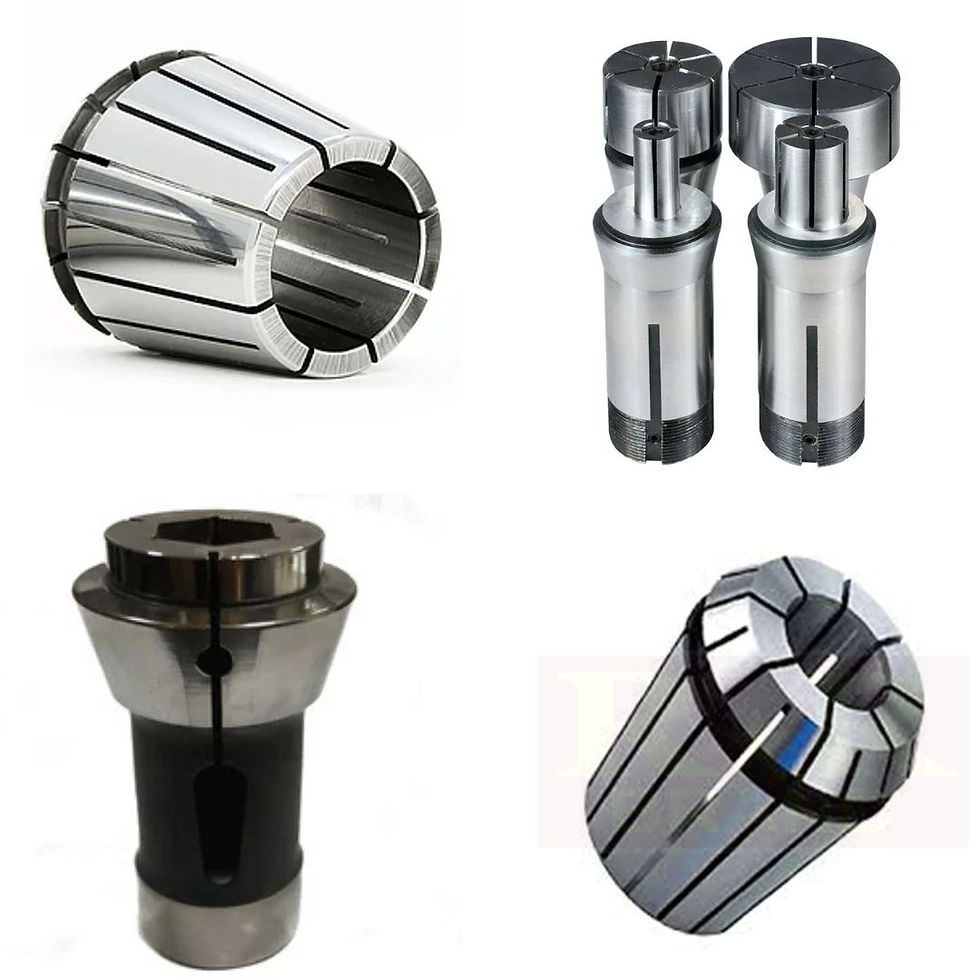
Different types of Collets such as solutions, Traub collets, DIN collets, ER collets, A-25 Collets, A-42 Collets, 161E Collets, and DIN 6343 Collets are designed for different machine requirements. Each one is engineered for precision—but only when used and installed correctly.
When setup is wrong, the collet stops behaving like a precision tool and starts becoming a source of instability.
What “Improper Setup” Really Looks Like on the Shop Floor
Most collet-related issues don’t come from major mistakes. They come from small, repeated habits such as:
Not cleaning the spindle or collet properly before installation
Applying uneven tightening force
Using the wrong size collet for the job
Reusing worn-out collets beyond their ideal life
Slight misalignment during fitting
Ignoring lubrication or dry fitting conditions
Individually, these may seem minor. But in continuous production, they slowly reduce machine efficiency.
The Real Impact on Productivity
Slower Production Without Realizing It
When a collet is not seated properly, the machine often compensates by reducing cutting efficiency. This leads to longer cycle times. In a multi-spindle setup, this delay gets multiplied across all active spindles, reducing total output by a noticeable margin over time.
Dimensional Variations and Rejection
If the grip is uneven, the workpiece may not stay perfectly centered. This results in inconsistent machining and dimensional errors. The outcome is simple but costly—more rejected parts and more rework, which directly affects productivity.
Increased Tool Wear
A poorly set collet creates vibration and imbalance. That vibration slowly damages cutting tools, causing them to wear out faster or even break unexpectedly. Every tool change means downtime, and downtime reduces output.
Machine Vibration That Spreads Through the System
In multi-spindle machines, stability is everything. If even one spindle has a setup issue, vibration can affect the entire machine. This reduces machining quality and creates inconsistency across all outputs.
Long-Term Damage to Spindles
Continuous vibration and uneven pressure eventually affect spindle health. Bearings wear faster, accuracy drops, and maintenance costs increase. What starts as a small setup issue can turn into a major repair problem.
Why Choosing the Right Collet Type Makes a Difference
Not all collets are designed the same, and using the wrong type can make setup problems worse.
For example:
are widely used in high-precision sliding head machines.
DIN collets are preferred for standardized, repeatable operations.
ER collets offer flexibility across different tool sizes.
DIN 6343 Collets are known for accuracy in automatic and multi-spindle machines.
Specialized designs like A-25 Collets, A-42 Collets, and 161E Collets are built for specific machine requirements and perform best when used in the correct setup environment.
Why Setup Mistakes Happen So Often
In real production environments, operators often work under time pressure. Machines need to keep running, deadlines are tight, and setup is sometimes rushed.
That’s where mistakes creep in:
Skipping cleaning steps
Over-tightening or under-tightening
Mixing collet series between machines
Using worn components longer than recommended
Not following manufacturer guidelines
These aren’t big errors—but they slowly affect overall productivity.
The Role of Quality Manufacturing
Good performance starts with good components. Reliable Collet manufacturers ensure tight tolerances, consistent material quality, and proper finishing, which reduces setup-related issues.
Working with a trusted collet manufacturer in india helps ensure compatibility, durability, and stable performance across multi-spindle systems. High-quality collets are easier to set up correctly and maintain their accuracy for longer periods.
Simple Practices That Prevent Bigger Problems
A few practical habits can significantly improve productivity:
Clean collets and spindle surfaces before every setup
Use proper torque tools instead of manual guesswork
Replace collets at regular intervals instead of pushing them too far
Standardize collet types like DIN collets or ER collets across machines
Train operators to focus on setup precision, not just speed
These small steps help avoid large-scale production losses.
The Bigger Picture: Productivity Depends on Consistency
In multi-spindle machining, productivity is not just about machine speed—it is about consistency across every spindle, every cycle, and every shift.
A poorly set collet might not stop production immediately, but it slowly reduces efficiency, increases waste, and adds hidden costs over time.
When everything is set up correctly—from Traub collets to DIN collets to ER collets—the machine runs smoother, tools last longer, and output becomes predictable.
Final Thought
Improper collet setup is one of those issues that often goes unnoticed until productivity starts dropping. The machine may still run, but it doesn’t run at its best.
Focusing on correct setup practices and using precision-engineered Collets from reliable sources is one of the simplest ways to keep multi-spindle machines performing at full efficiency—shift after shift, without unnecessary interruptions.

Comments