DIN vs ER Collets: Which Is Better for Tool Compatibility?
- nazmakhatoon1057
- Jan 1
- 3 min read
In modern machining, tool performance depends heavily on one often-overlooked component—the collet. No matter how advanced your CNC machine is, poor tool holding can lead to runout, vibration, tool wear, and inconsistent results.
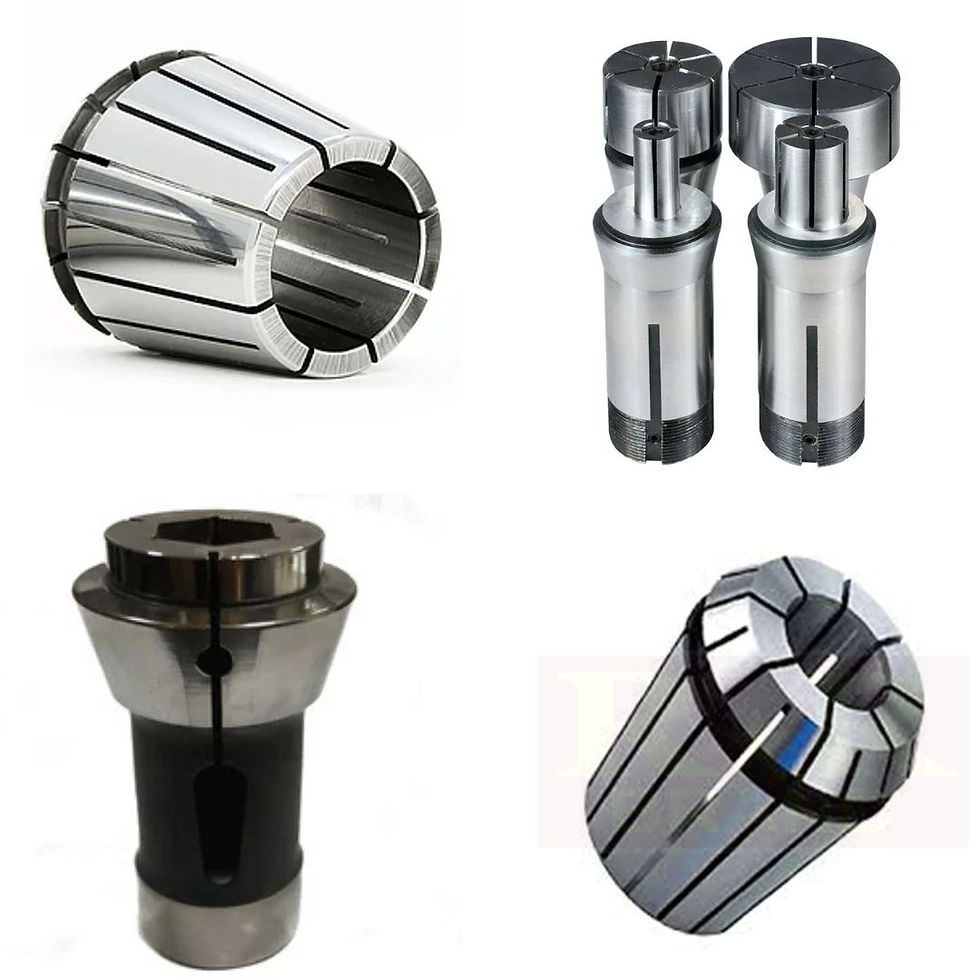
That’s why choosing the right collet system is essential. Among the most commonly used options, Din collets and Er collets stand out as industry favorites. But when it comes to tool compatibility, which one truly fits your machining needs better?
Trusted collet manufacturers like Sikka Collets have helped machine shops make informed choices by offering both systems with precision engineering and consistent quality. As a reputed collet manufacturer in India, Sikka Collets supplies solutions designed for real-world production challenges.
A Quick Overview of DIN and ER Collets
DIN collets, manufactured under the DIN 6343 standard, are known for their rigid structure and fixed-size gripping capability. They are widely used in lathes, automatic machines, and turning centers where consistency and accuracy are critical.
On the other hand, Er collets were developed to offer flexibility without sacrificing precision. Their defining feature is a wider clamping range, making them extremely popular in milling machines and CNC machining centers where tool sizes change frequently.
To understand DIN specifications in detail, explore DIN 6343 Collets here.
Tool Compatibility and Clamping Flexibility
Tool compatibility plays a major role in determining which collet system works best for your operation.
DIN collets are designed to grip one specific tool diameter. This makes them highly stable and accurate but limits flexibility. Shops that repeatedly use the same tool sizes often prefer DIN collets because they deliver reliable performance with minimal setup variation.
Er collets, by contrast, cover a range of diameters within a single collet. This means fewer collets are required to handle multiple tools, reducing downtime caused by frequent tool changes. For shops that handle varied jobs or prototypes, Er collets provide a clear advantage in compatibility.
You can explore high-quality ER Collets suited for CNC applications here.
Precision and Concentricity in Daily Use
Accuracy is non-negotiable in precision machining, and concentricity directly affects surface finish and tool life.
Din collets are well known for their tight tolerances and excellent concentricity. Since they clamp a single diameter, they minimize runout and provide consistent results in repetitive operations such as turning and drilling.
Er collets also deliver impressive concentricity, especially when sourced from experienced collet manufacturers. While they may not always match the ultra-tight fit of a fixed DIN collet, their performance easily meets the demands of most milling and CNC tasks.
Application Versatility Across Machines
Another key difference lies in how these collets fit into different machining environments.
DIN collets are commonly used with automatic lathes and turning machines, especially in high-volume production settings.
Er collets are widely used with CNC machines, vertical machining centers, and tool holders due to their adaptability.
When paired with high-quality CNC collet chucks, ER collets become even more versatile, offering excellent grip stability at higher speeds. You can view compatible CNC Collet Chucks here.
Inventory, Cost, and Operational Efficiency
From a cost and inventory standpoint, the two systems differ significantly.
With DIN collets, each tool size requires a separate collet, which can increase inventory over time. However, for shops focused on long production runs, this investment often pays off in consistency and reduced tool errors.
Er collets simplify inventory management. Because one collet supports multiple sizes, fewer collets are needed overall. This makes ER systems cost-effective and easier to manage, especially for job shops handling varied workpieces.
Final Thoughts: Which Collet Should You Choose?
Both Din collets and Er collets have proven their value in machining environments around the world. The right choice depends on how your shop operates.
Choose DIN collets when precision, repeatability, and fixed tool sizes are the priority.
Choose Er collets when flexibility, faster tool changes, and broad compatibility matter more.
By sourcing from reliable collet manufacturers in India like Sikka Collets, you ensure consistent quality, long service life, and dependable machining performance. The right collet system not only improves tool compatibility but also enhances productivity, reduces waste, and supports smoother daily operations.
Comments