DIN 6343 Collets vs ER Collets: Why Stronger Clamping Force Is Critical for Precision Machining
- nazmakhatoon1057
- Jan 28
- 3 min read
In precision machining, even the smallest slip can lead to big problems—scrapped parts, wasted time, and increased costs. That’s why collets, though small and simple-looking, are such a critical part of the process.
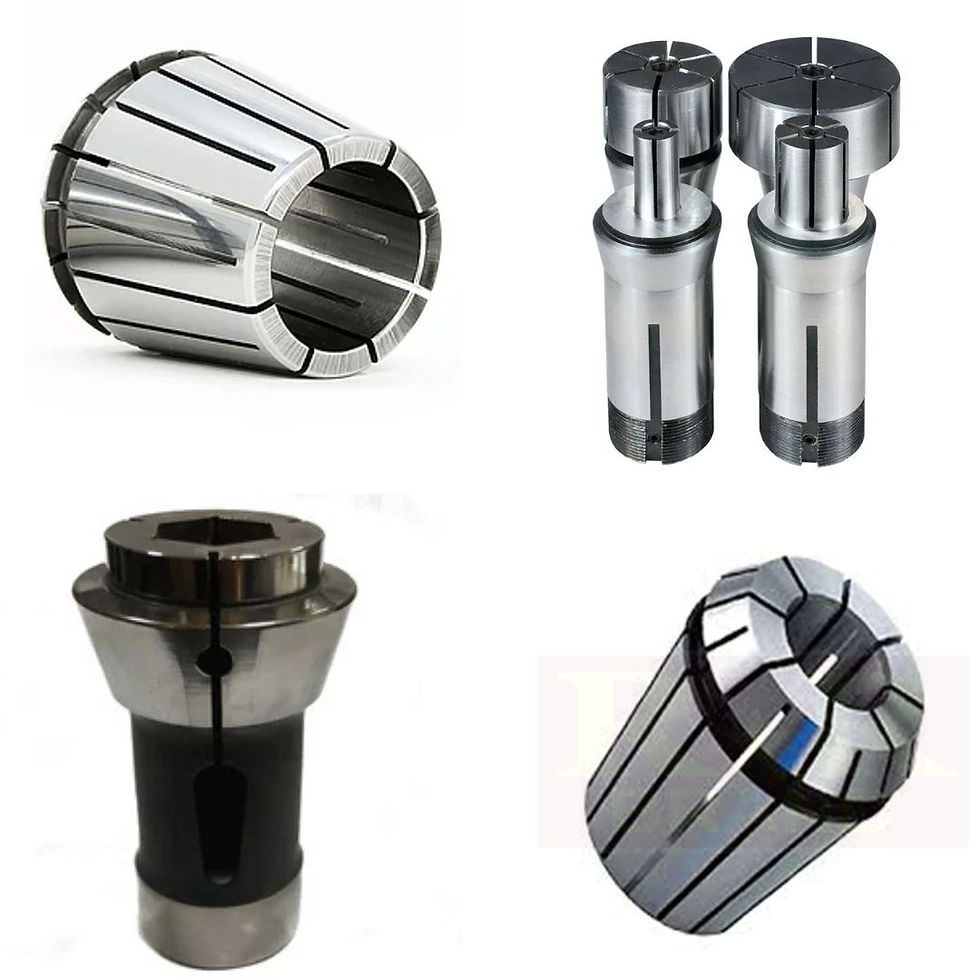
They’re the unsung heroes that hold tools and workpieces securely, ensuring every cut, drill, or turn is as accurate as it should be.
Among the most widely used collets are DIN 6343 collets and ER collets. Both have their place in machining, but understanding their differences—especially when it comes to clamping force—can make a huge difference in achieving precision results.
A collet is a device designed to grip cylindrical components tightly and evenly. Unlike standard chucks, collets provide better concentricity and minimal runout. This makes them essential for CNC operations, high-speed turning, milling, and other applications where precision cannot be compromised.
Why Clamping Force Matters
You might wonder why clamping force is such a big deal. Here’s why it matters:
1. Accuracy You Can Count OnEven a tiny movement during machining can throw off tolerances. Collets with strong clamping force hold tools and workpieces firmly in place, keeping cuts, drills, and turns perfectly aligned. This is crucial for producing parts that meet strict specifications.
2. Reduced Vibration and ChatterVibration can ruin surface finishes and wear down tools quickly. Collets that grip securely minimize chatter, giving you smoother cuts and a better overall machining experience.
3. Longer Tool LifeWhen tools shift or aren’t held properly, they wear unevenly and break faster. Strong, evenly distributed clamping protects your tools and saves money in the long run.
DIN 6343 Collets
DIN 6343 collets are known for their strong grip and reliability in precision turning applications. They offer:
Maximum stability and minimal runout
High gripping force for tight-tolerance machining
Long-lasting performance, even in high-volume production
These collets are perfect for operations where precision and repeatability are critical. If you want more details, check out these DIN collets that are designed to meet the toughest machining standards.
ER Collets
ER collets are versatile and widely used in milling, drilling, and general turning operations. They are popular because they:
Accommodate a wide range of tool sizes
Provide good concentricity for most applications
Are easy to change for quick setups
However, ER collets generally have a slightly lower clamping force than DIN 6343 collets. For tasks that demand maximum stability and zero-tolerance accuracy, this difference can be significant. Learn more about ER collets for versatile machining options.
Comparing DIN 6343 and ER Collets
Feature | DIN 6343 Collets | ER Collets |
Clamping Force | Strong and rigid | Moderate, flexible |
Accuracy | Extremely precise | High, but slightly less rigid |
Applications | Precision turning, high-volume production | Milling, drilling, general-purpose work |
Tool Holding | Excellent for high-torque or tight-tolerance tools | Versatile, quick-change tools |
For high-stakes applications—think aerospace, automotive, or medical components—DIN 6343 collets often outperform ER collets due to their superior grip and stability.
Working with Trusted Collet Manufacturers
Even the best collet won’t perform well if it’s poorly made. That’s why it’s important to work with trusted Collet manufacturers. A reputable collet manufacturer in India delivers precision-engineered collets that meet global standards.
Whether you need Traub collets, DIN collets, ER collets, or CNC collet chucks, working with a reliable manufacturer ensures consistent performance, smoother operations, and longer tool life. Explore Traub collets for high-speed lathes and automatic machines, along with high-quality DIN collets and ER collets for precise, zero-tolerance machining.
How the Right Collet Boosts Efficiency
Using the right collet doesn’t just improve accuracy—it makes the entire machining process more efficient. With a secure grip, you’ll spend less time adjusting setups, fewer parts are rejected, and production runs smoother and faster. Regular cleaning and inspection of collets will help them maintain peak performance and ensure that your operations stay on track.
Conclusion
When it comes to precision machining, clamping force isn’t just a technical detail—it’s a key to success. While ER collets are versatile and convenient, DIN 6343 collets provide stronger clamping, superior stability, and unmatched accuracy. Choosing the right collet from trusted Collet manufacturers—whether it’s Traub collets, DIN collets, or ER collets—ensures your tools stay stable, your parts stay precise, and your machining stays efficient.
Comments