Design Considerations Behind High-Precision Collets
Designing a high-precision collet is therefore not as simple as making a component that can hold a tool. Engineers have to consider material quality, geometry, flexibility, surface finish, dimensional tolerances, clamping pressure, and long-term durability. Small variations in any of these areas can affect machining accuracy.
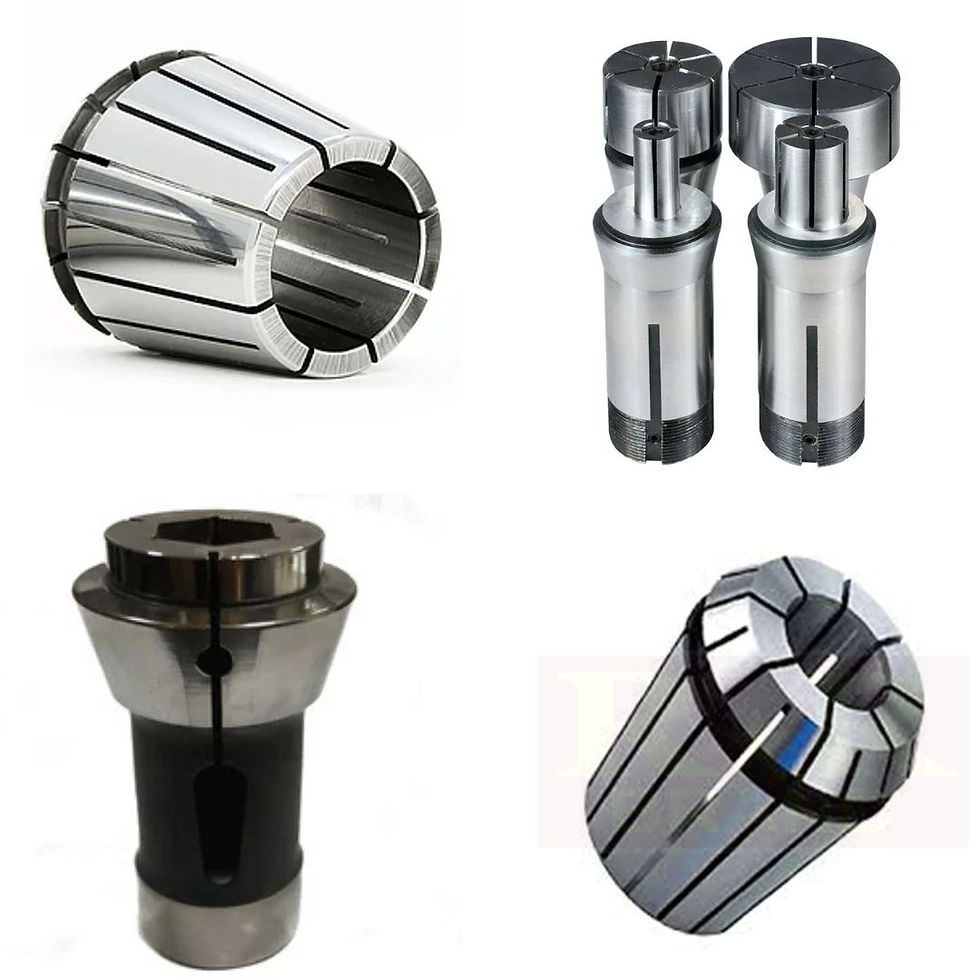
For experienced Collet manufacturers, the goal is to bring all these factors together so that the finished collet performs reliably in real machining conditions.
Why Precision Matters in Collet Design
The main purpose of a collet is to hold a tool or workpiece securely while keeping it centred on the spindle axis. If the tool is not held accurately, even a small amount of runout can create problems.
Runout can cause one cutting edge to do more work than the others. This may lead to uneven tool wear, vibration, poor surface finish, and dimensional variations in the finished component.
A precision collet is designed to reduce these problems by providing consistent contact and stable positioning. The quality of the collet becomes particularly important in high-speed and close-tolerance machining applications.
Material Selection Comes First
The material used to manufacture a collet has a direct effect on its performance and service life. A collet is repeatedly compressed and released, so it needs to withstand this movement without permanently losing its shape.
The material must provide a good balance of hardness, strength, toughness, and elasticity. Excessive hardness without sufficient toughness can make a component more vulnerable to cracking. On the other hand, a material that is too soft may wear faster and lose its gripping characteristics.
Heat treatment is another important part of the process. Proper heat treatment can improve wear resistance and strength while allowing the collet to retain the flexibility needed for repeated clamping cycles.
A reliable collet manufacturer in India therefore needs strong control over material selection as well as heat-treatment processes.
Getting the Geometry Right
Collet geometry plays a major role in how the component grips and releases a tool.
The shape and arrangement of the slits allow the individual collet segments to move inward when the collet is compressed. These segments need to move in a controlled and reasonably uniform manner.
If the geometry is not properly designed, some segments may grip differently from others. This can result in uneven pressure and increased runout.
The taper is also important. When the collet is pulled into the matching taper of a chuck, axial movement is converted into radial gripping force. The taper geometry must therefore be manufactured accurately to ensure proper contact between the collet and its mating component.
This level of accuracy is particularly important for specialized products such as Traub collets, which are used in precision turning applications.
Keeping Runout Under Control
For precision machining, runout is one of the biggest concerns.
A tool may be manufactured to extremely tight tolerances, but that accuracy can be compromised if the collet does not hold it concentrically. Even a small amount of misalignment can become noticeable during high-speed rotation.
Several design features help control runout. The internal bore must be accurately manufactured, while the external taper needs to match the chuck correctly. The gripping surfaces must also be properly finished.
Manufacturing consistency matters here. A single high-quality collet is useful, but production requirements often demand that every collet in a batch performs within the required tolerance range.
Maintaining Even Clamping Pressure
A good collet should apply clamping pressure around the tool shank as evenly as possible.
Uneven pressure can allow the tool to move slightly during machining. It may also concentrate stress on certain areas of the tool shank.
Balanced clamping improves tool stability and helps the cutting edges share the machining load more consistently. This can contribute to better surface finish and longer tool life.
The internal profile, slit arrangement, material properties, and overall geometry all influence how the clamping force is distributed.
Elasticity and Long-Term Performance
Collets are designed to flex. Every tightening and release cycle causes the collet segments to move.
This repeated movement makes fatigue resistance an important consideration during design. If a collet is regularly operated outside its intended gripping range or subjected to excessive force, its elasticity can eventually be affected.
A well-designed collet should maintain its intended spring action over many operating cycles when it is used correctly.
This is one reason proper sizing is so important. Using the correct collet for the tool diameter helps maintain the designed range of movement and reduces unnecessary stress.
Why Surface Finish Matters
Surface finish is another detail that can have a surprisingly large effect on performance.
The internal gripping surfaces need to be smooth and free from burrs, scratches, or other imperfections. Problems on these surfaces can prevent the tool from making consistent contact.
The external taper also needs an appropriate finish because it must mate accurately with the corresponding taper inside the chuck.
For example, ER collets depend on accurate mating surfaces to provide consistent tool positioning and gripping. Cleanliness is equally important because small chips or particles between mating surfaces can affect concentricity.
Dimensional Accuracy and Standards
Precision collets must be manufactured within controlled dimensional tolerances. Critical measurements can include the bore, taper, overall dimensions, and gripping range.
Standardized products such as DIN 6343 Collets are designed around established dimensional requirements for compatible tooling systems. Following such standards helps maintain consistency and makes it easier to select compatible components.
For machining companies, dimensional consistency becomes especially important when replacement collets are introduced into an existing production setup.
Different Applications Need Different Collets
There is no single collet design that is ideal for every machining application.
The machine type, spindle arrangement, tool dimensions, workpiece requirements, and machining conditions all influence collet selection.
For example, A-25 Collets and A-42 Collets are intended for their respective applications and equipment requirements. 161E Collets are another specialized option for compatible tooling systems.
The important point is to select the collet according to the actual machine and application instead of choosing a product based only on its appearance or basic dimensions.
The Collet and Chuck Must Work Together
A collet cannot deliver its full performance on its own. It is part of a complete tool-holding system that includes the chuck, nut, spindle, and cutting tool.
The components need to match properly. A high-quality CNC collet chuck paired with a suitable collet can provide stable and accurate tool holding.
Incorrect assembly, poor cleaning, damaged mating surfaces, or incompatible components can reduce the accuracy of the entire system.
Quality Control During Manufacturing
Precision design has little value if manufacturing quality is inconsistent. For this reason, inspection is an important part of collet production.
Critical dimensions, concentricity, hardness, surface condition, and other relevant characteristics need to be checked according to the product requirements.
Good quality control helps identify variations before the collet reaches the machining floor. It also gives manufacturers greater confidence that different batches will provide consistent performance.
Final Thoughts
High-precision collets are the result of careful engineering rather than a single design feature. Material selection, heat treatment, slit geometry, taper accuracy, surface finish, elasticity, and dimensional control all work together to determine how well a collet performs.
A properly designed collet helps keep the tool centred, distributes clamping force more evenly, and reduces unwanted movement during machining. The result can be better tool life, improved surface finish, greater dimensional accuracy, and fewer interruptions during production.
For modern CNC machining, precision does not stop at the cutting tool. The tool-holding system needs the same level of attention. Selecting the right collet, matching it with a compatible chuck, and maintaining it properly can make a noticeable difference to the overall machining process.

Comments